
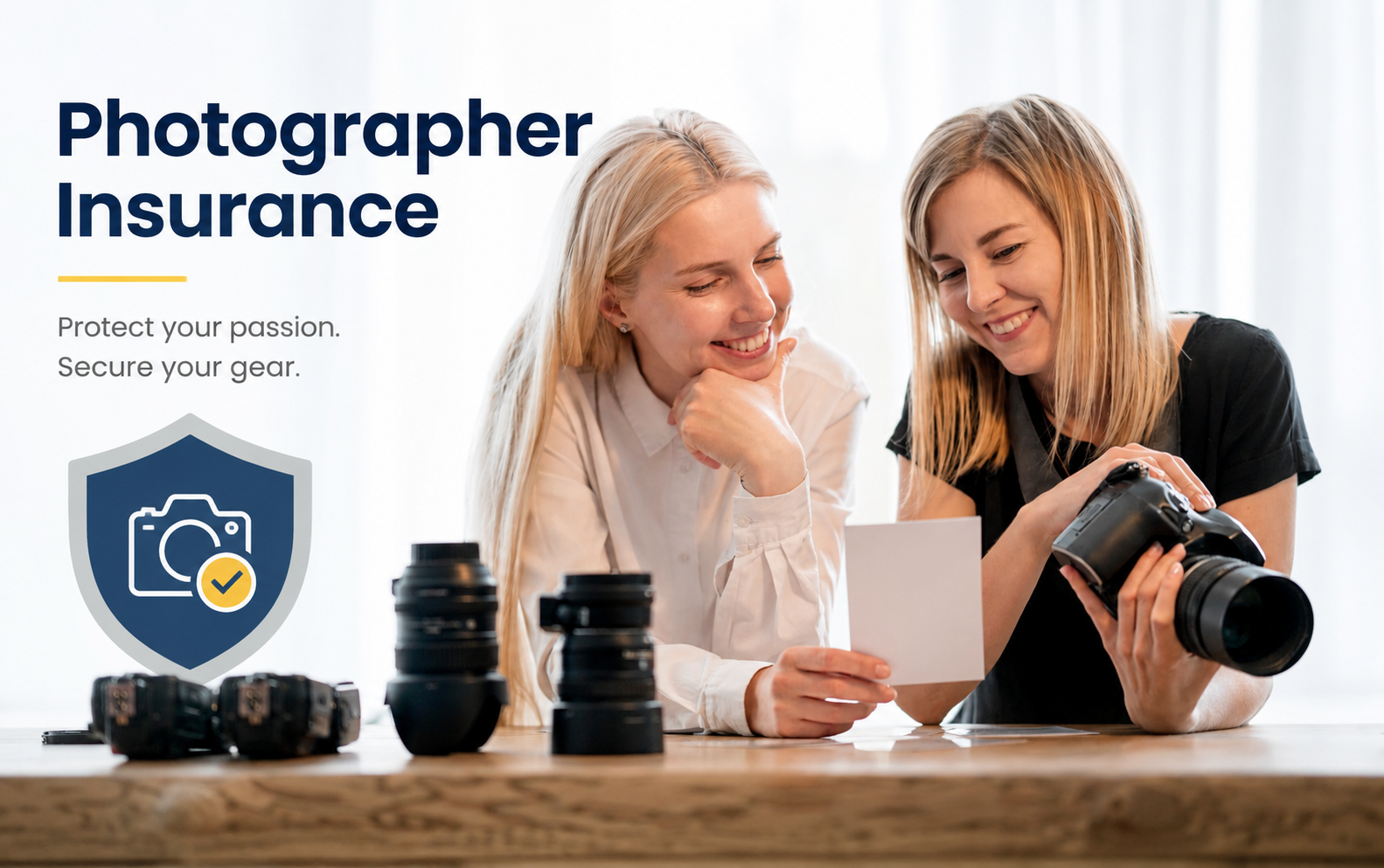
Photography looks like a simple job from the outside — show up, take great shots, hand over the files, get paid. Anyone who has actually run a photography business knows better. Between expensive gear, unpredictable locations, client contracts, and the occasional accident on set, there’s a lot riding on a single shoot. That’s exactly where photographer insurance comes in, and it’s one of the most overlooked investments a photographer can make.
This guide breaks down everything you need to know: what photo grapher insurance actually covers, why it matters, the different types available, and how to choose the right policy for your specific style of work.
What Is Photographer Insurance?
Photographer insurance is a category of business insurance designed specifically for professionals who shoot photos for a living — whether that’s weddings, portraits, commercial work, real estate, or editorial photography. It’s built to protect against the unique risks photographers face: damaged or stolen equipment, accidental injury to a client, lawsuits over image rights, and even data loss from a corrupted memory card.
Unlike a generic business policy, photographer-specific coverage understands that your camera bag might be worth more than your car, and that a single lawsuit from a missed wedding shot could sink an entire business if you’re not protected.
Why Photographers Actually Need Insurance
Many photographers, especially freelancers and those just starting out, assume insurance is optional or only necessary for big studios. In reality, risk shows up in ways people rarely anticipate:
- A guest at a wedding trips over your light stand and gets injured.
- Your camera is stolen from your car between shoots.
- A client claims you lost irreplaceable photos from a once-in-a-lifetime event.
- A venue requires proof of liability coverage before allowing you to shoot on-site.
- Your studio floods and destroys thousands of dollars in lenses and lighting equipment.
Any one of these situations can cost thousands of dollars — sometimes tens of thousands — without the right coverage in place.
Types of Photographer Insurance Coverage
Not all policies are created equal, and most professional photographers need a combination of coverage types rather than a single policy. Here’s a breakdown of the main categories:
| Coverage Type | What It Protects | Who Typically Needs It |
| General Liability Insurance | Covers third-party injury or property damage during a shoot | Nearly all photographers, especially those shooting on-site or at venues |
| Equipment (Inland Marine) Insurance | Covers cameras, lenses, drones, and lighting against theft, damage, or loss | Photographers with valuable or portable gear |
| Professional Liability (Errors & Omissions) | Covers claims of lost data, missed shots, or breach of contract | Wedding, event, and commercial photographers |
| Business Property Insurance | Covers studio space, furniture, and fixed equipment | Photographers with a physical studio |
| Business Owner’s Policy (BOP) | Bundles general liability and property coverage at a lower cost | Small studios and solo photographers |
| Commercial Auto Insurance | Covers vehicles used to transport gear or travel to shoots | Photographers who drive to locations regularly |
| Workers’ Compensation | Covers injuries to employees or assistants | Studios with hired staff or second shooters |
General Liability Insurance: The Non-Negotiable
If you only get one type of coverage, this is usually it. General liability insurance protects you if someone is injured or their property is damaged because of your work. Many wedding venues, event planners, and corporate clients won’t even let you through the door without proof of this coverage — it’s often a contractual requirement before you can shoot.
This policy typically covers legal fees, medical expenses, and settlement costs if a claim is filed against you.
Equipment Insurance: Protecting Your Biggest Investment
Cameras, lenses, drones, tripods, and lighting rigs aren’t cheap, and they don’t stay safe just because you’re careful. Equipment insurance — sometimes called inland marine coverage — protects your gear against theft, accidental damage, and loss, whether it happens in your studio, on location, or in transit.
This is particularly important for photographers who travel frequently or shoot outdoors, where exposure to weather, crowds, and unfamiliar environments increases the risk of damage.
Professional Liability: Covering the “What Ifs” of Client Work
Professional liability insurance, also known as errors and omissions (E&O) insurance, covers situations where a client claims you failed to deliver on your promise. This might include:
- Corrupted or lost image files after an event that can’t be redone
- A missed shot the client considered essential (like a first kiss or ring exchange)
- Disputes over contract terms or delivery timelines
Since many of these moments are impossible to recreate, this coverage is especially critical for wedding and event photographers.
How Much Does Photographer Insurance Cost?
Pricing varies based on location, coverage limits, equipment value, and business size, but most solo photographers can expect:
- General liability: roughly $25–$50 per month
- Equipment coverage: based on the total value of gear insured
- Bundled BOP policies: often more cost-effective than buying separate policies
Compared to the potential cost of a lawsuit or replacing a stolen camera kit, these premiums are a small price for long-term peace of mind.
How to Choose the Right Policy
When comparing photographer insurance providers, keep these factors in mind:
Coverage limits
Make sure they match the value of your gear and the scale of your typical clients.
Deductibles
A lower premium often means a higher deductible, so balance monthly cost against out-of-pocket risk.
Specialization
Providers who understand photography businesses tend to offer more relevant add-ons, like coverage for rented gear or destination weddings.
Claim process
Look for insurers known for fast, straightforward claims handling, especially for time-sensitive equipment replacement.
Additional insured options
Many venues require you to add them as an “additional insured” on your policy, so confirm this is available.
Final Thoughts
Photography relies on trust, creativity, and split-second timing, but one accident, theft, or lawsuit can quickly wipe out your income. Photographer insurance isn’t about expecting the worst; it’s about making sure your business, your equipment, and your reputation stay protected no matter what happens on set.
Whether you’re a full-time studio owner or a freelancer building your portfolio one shoot at a time, the right insurance policy gives you the freedom to focus on what you do best: capturing the moment.
Visit eaglethougts for more details.